Research
Current aspects of research in communications are manifold. Therefore, the Communication Systems Research (CSG) Group at IFI focuses today on the following topics:
Privacy
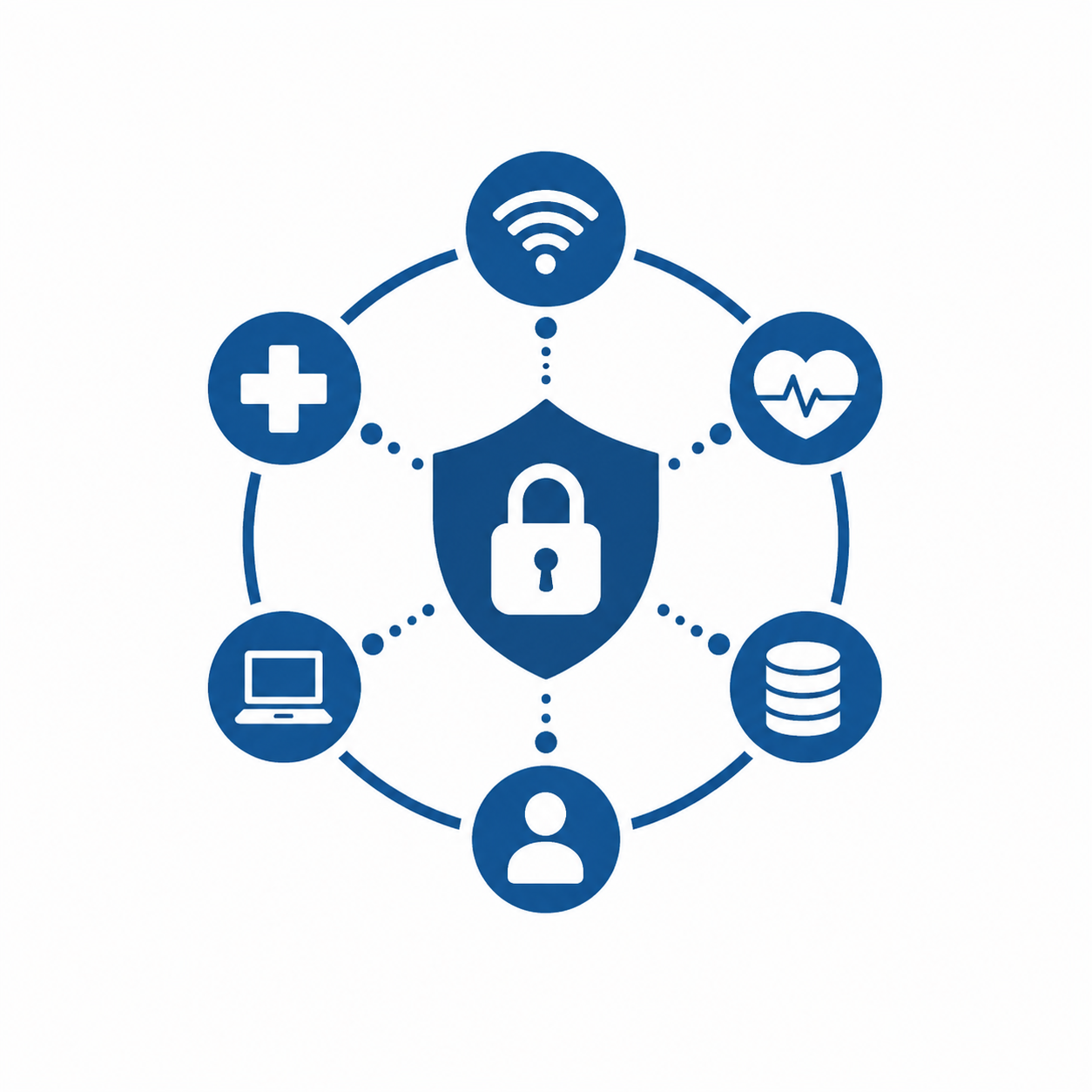
The goal of this working area is to investigate, evaluate, and develop technologies for privacy-preserving communication systems and data-driven applications. Current work includes analyzing privacy leakage from communication metadata, Bluetooth signals, and crowdsourced finding networks, as well as investigating smart-home privacy risks in technologies such as Zigbee and Philips Hue in projects such as TRACE. A further focus is synthetic data generation, both for communication protocol packets and for sensitive domains such as healthcare, where synthetic data can help preserve patient privacy while still providing sufficient and useful data for AI training and evaluation.
AI for Security

The goal of this working area is to investigate, design, and develop AI-based methods for improving cybersecurity while ensuring that AI systems themselves remain robust, trustworthy, and privacy-preserving. Current work spans adversarial machine learning, decentralized and federated learning, AI-driven malware detection and mitigation, trustworthy AI, synthetic cybersecurity data generation, and automated attack detection in IoT and resource-constrained environments. Projects such as CyberFabric, CyberDFL, CyberForce, CyberMind, CyberSenseIT, CyberSpec, and CyberTracer explore attacks and defenses across data, model, network, and system layers, with particular emphasis on robustness, privacy, trust, reputation, anomaly detection, adaptive mitigation, and the secure deployment of AI in real-world cyber-physical and distributed systems.
Current Projects: NATWORK CyberFabric
Past Projects: CyberDFLCyberForceCyberMindCyberSenseITCyberSpecCyberTracer
Internet of Things - Wireless Sensor Networks and Security
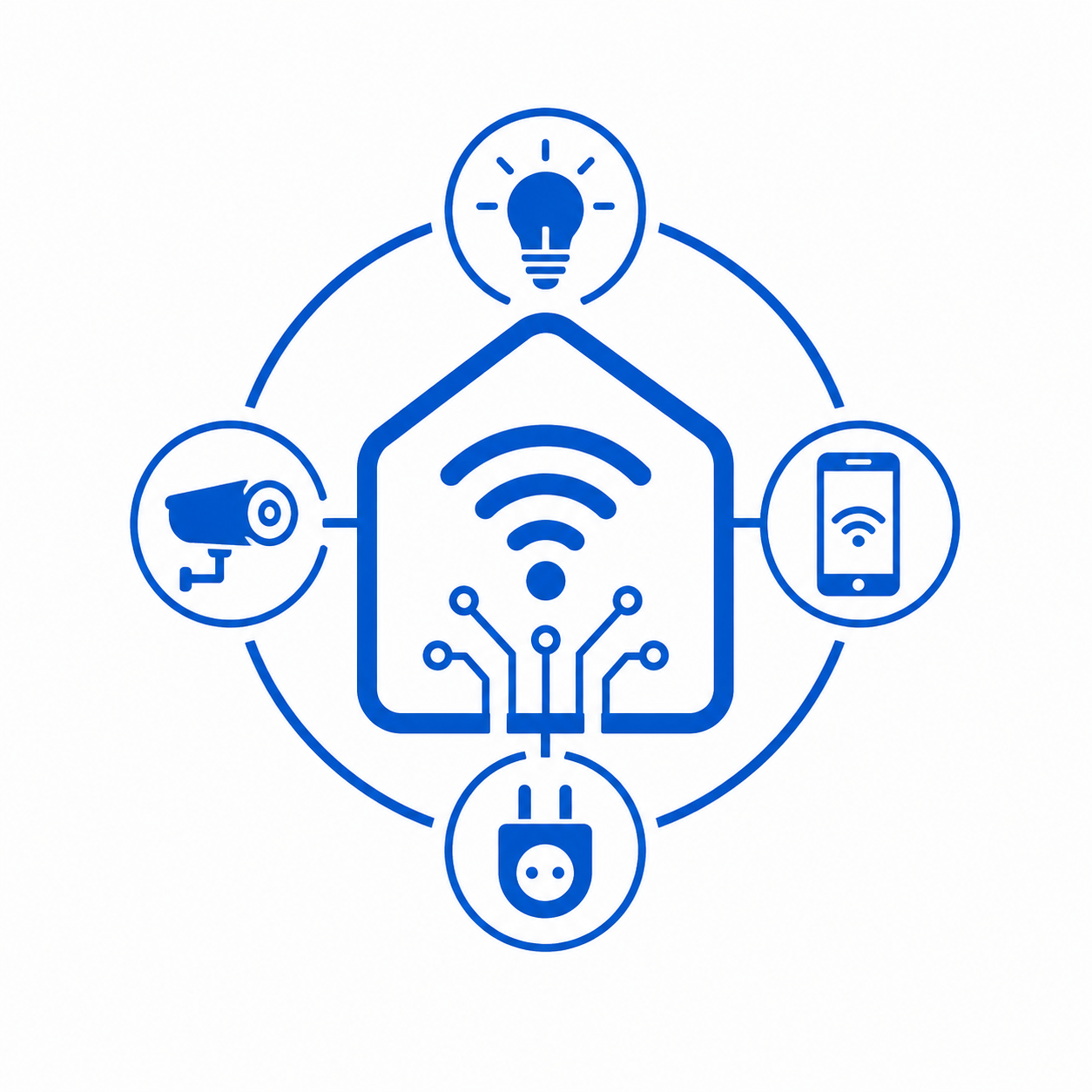
Today the Internet connectivity rises and everyone speaks of "The Internet of Thing" (IoT)" that includes all kind of devices that use IP communications. IoT is not limit to notebooks and servers anymore, but includes also constraint devices (e.g., mobiles, sensor nodes). Those devices are limited in memory, power, and computational capacity. Therefore, research is challenging and is not limited to architecture issues, but also includes security aspects and solution design in order to build trust in the network and to support privacy.
Current Projects: TRACE
Past Projects:CERTIFY CONCORDIA, TomP2PsymbIoTe, SecureWSN, FLAMINGO, SmartenIT, parkITsmart
Blockchains and Distributed Ledgers
The goal of this working area has been set to investigate, evaluate, and apply the blockchain technology for communications, distributed applications, and new business cases. As such, the various different set of functions, applications, and stakeholders being involved in the smart contract arena (considered as the core of a blockchain) are put into interrelated technical, economic, and legal perspectives. Thus, applications have been designed and implemented, systems have been architectured and trialed, and mechanisms are being developed to show the innovation as well as limitations of the blockchain technology today. An overview of Blockchain-related work performed at the CSG since 2014, including the full set of CSG team members, students, their papers and theses, and respective talks, is available in the IfI Technical Report IFI-2019-01 (PDF, 1 MB).
Current Project: : NATWORK
Past Projects: CERTIFY CONCORDIA, Blockchain Overview, BlockchainTransport, BC4CC , Blockchain-based Temperature Monitoring for Medical Drugs Transport, Blockchain-based Signaling System (BloSS)Coinblesk
Telecommunications Economics

The goal of this area is to develop a model and architecture for multi-provider technical, socio-economic, and regulatory aspects of telecommunications, to provide guidelines and recommendations to European players (end-users, enterprises, operators, regulators, policy makers, content providers) for the provision of new converged services to citizens and enterprises, and to address the high decentralization aspect of multi-player situations.
Past Projects: CONCORDIAsymbIoTe, FLAMINGO, AbaCUS, ACROSS, Hive2Hive, CoinbleskSmoothIT, EcoNets,Econ@Tel, SESERV
Network Management

The application of network management mechanisms in the networking domain has progressed in terms of technical approaches very far. However, the integration of economic management mechanisms into existing network management models remains under strong developments. Thus, this work investigates the use of, e.g., session models, pricing models, or business models, within today's management models. Additionally, it considers a fully integrated accounting infrastructure as a basis for all economic approaches.
Past Projects:SmoothIT, EMANICS, EC-GIN, EcoNets, DaSAHIT, SESERV, Econ@Tel
Charging and Quality-of-Service (QoS)/Quality-of-Experience (QoE)

This area addresses the problem of providing necessary architectural and functional features in an Internet-based environment so that networking customers will be enabled to select services according to their needs and will be charged in a fair, incentive-driven manner. Pre-paid mechanisms for All-IP networks and services are under special investigation. A close relation to the work undertaken in the area of distributed accounting can be observed.
Past Projects: SmartenIT,FLAMINGO, AbaCUS, ACROSS, COST 290, Daidalos II, AMAAIS
Overlay Networks and Systems

The popularity of P2P has increased dramatically, but security, digital rights management and copy right issues, and market management aspects have been neglected for quite some time. Work in this area targets at suitable models and technology to enable fast and unstructured search as well as charging support for P2P services.
Past Projects: SmartenIT, FLAMINGO, PeerMart, EC-GIN, DaSAHIT, CoopSC,LiveShift TomP2P
Distributed Accounting

Past Projects: DAMMO II, Akogrimo, PeerMart, EC-GIN, DaSAHIT, SCRIPT, SESERV, AMAAIS
Supporting Networking Mechanisms for Grids

Past Projects: Akogrimo, BEinGRID, EC-GIN
Biometric Access Control

Past Projects: BioLANCC, BioXes
Further Research Activities and Results
- CSG-developed software, systems, and tools can be accessed at CSG software, systems, tools.
- CSG provides a number of services and testbed infrastructures in support of research and other activities.
- CSG Seminar for Doctoral Students
- Fast Similarity Search (FastSS) performs an exhaustive similarity search in a dictionary, based on the edit distance model of string similarity.